Home  /  Recipes  /  Langsat Mirror Square Cheesecake

MIRROR GLAZE

Langsat Mirror Square Cheesecake

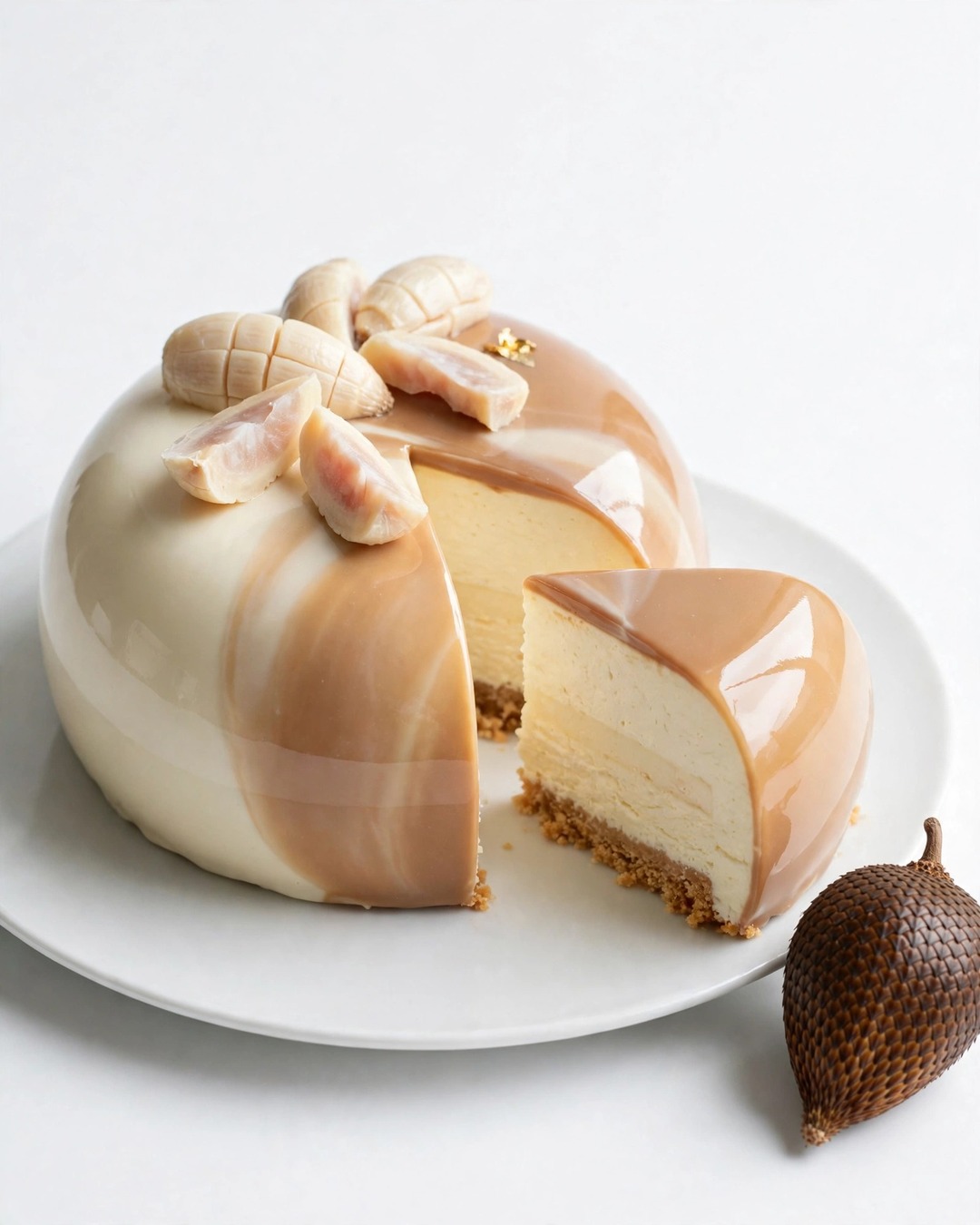
A perfect square — langsat in a glossy ivory mirror-glazed no-bake cheesecake, finished with translucent langsat segments and gold leaf.

If we had to pick one cake to explain what Ado Recipes is about, this Langsat Mirror Square Cheesecake would be on the shortlist. The mirror glaze is poured in one confident pass over a thoroughly chilled cake, giving that glass-like shine readers ask us about more than anything else. Everything you need is in the list below, measured to the gram, with the steps in the exact order we make it in our own kitchen.

Ingredients

  • 200g digestive biscuits, crushed
  • 100g butter, melted
  • 200g langsat flesh, seeds removed and blended smooth
  • 500g cream cheese, room temp
  • 100g powdered sugar
  • 300ml heavy cream
  • 2 tsp powdered gelatin, bloomed in 3 tbsp cold water
  • 1 tsp vanilla extract
  • For the mirror glaze: 150g white chocolate, chopped; 100g sugar; 100ml sweetened condensed milk; 80ml water; 2 tsp powdered gelatin, bloomed in 3 tbsp cold water
  • Fresh langsat segments and edible gold leaf flakes, to decorate

How to make it

  1. Mix the crushed biscuits with melted butter, press into a 20cm square pan and chill 30 min.
  2. Beat the cream cheese, powdered sugar, vanilla and the langsat purée until smooth.
  3. Melt the bloomed gelatin, stir through the filling, then whip the cream to soft peaks and fold in.
  4. Spread over the crust and chill at least 6 hours until firm (freeze the last hour for the cleanest glaze).
  5. For the glaze, heat the sugar, water and condensed milk to steaming, stir in the bloomed gelatin until melted, pour over the white chocolate and blend smooth. Cool to about 30°C and pour over the cold cheesecake. Chill 2 hours.
  6. Finish with the fresh langsat segments and gold leaf, cut a corner piece to show the layers, and serve.

Baker's tips

  • Pour the glaze at 30–35°C: hotter and it slides straight off, cooler and it sets before it can level into a mirror.
  • Strain the glaze through a fine sieve and pop any bubbles; every bubble you leave in becomes a crater on the surface.
  • Pour in one confident, continuous pass starting from the centre, then leave it alone — going back with a spatula kills the mirror finish.